
How To Maximize Your Home Studio Without Buying More Gear
A home studio isn’t limited by gear nearly as often as it’s limited by friction. The best studios—commercial or home—are optimized for speed, flexibility, and comfort. When everything is connected, routed, and thought through, you stop fighting your setup and start making better records.
1/13/20264 min read
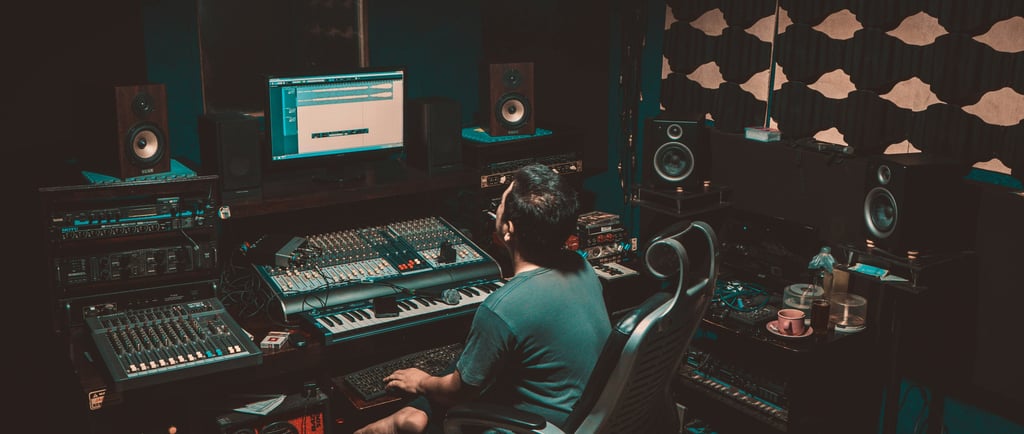
A well-run home studio doesn’t feel like a collection of gear — it feels like a system. When everything is connected, routed, and laid out with intention, the studio disappears and the focus shifts entirely to making music. That’s the goal: removing friction so ideas turn into recordings without interruption.
Always Have Everything Connected and Ready to Go
One of the biggest productivity killers in a home studio is setup time. If you have to stop a creative moment to hunt for cables or set up a microphone, you’re already losing energy. Professional studios work because everything is always patched and ready, even if it isn’t being used in that moment.
Microphones should live on stands with cables already run. Instruments should stay plugged into DIs or switchers. Outboard gear shouldn’t be treated like a special occasion tool — it should be part of the everyday signal path. When inspiration hits, the ability to hit record immediately often matters more than having the “perfect” chain.
That also means incorporating a template to match your workflow. Being able to start from a template allows you to cut even more steps out of the process by having your go-to recording chains ready to go. If you're not sure where to start, visit www.BrandonMixing.com/daw-templates for professional templates.
Use Your Audio Interface Like the Center of the Studio
Most people drastically underuse their audio interface. It isn’t just a box that gets sound into the computer — it’s the nerve center of the entire studio.
If you’re using a Focusrite interface, features like AIR are there for a reason. AIR can add clarity and presence to vocals, acoustic guitars, and DI instruments before they ever hit your DAW. Engaging it intentionally during tracking can save you from chasing that same brightness later with EQ.
Inside your DAW, take the time to properly configure and label your inputs and outputs. Once your I/O is organized, routing becomes second nature. Multiple headphone outputs can be used to create separate cue mixes, talkback paths, or click tracks. Even modest interfaces are capable of far more routing flexibility than most people realize — but only if you actually set it up.
Open up the software program that runs your interface (i.e. Fucosrite Control) and think about the gear you have connected. Do you have a second set of speakers lying around? Use them as a second monitor. Not using the second headphone output? Run an 1/8 aux cable into your bluetooth speaker and now you have a second stereo monitor.
A Second Monitor Changes Everything
This brings me to my next point: a second monitor doesn’t have to be good — it just has to exist. Even an old, JBL bluetooth speaker can dramatically improve your workflow. When you have the ability to quickly switch back and forth between monitors, you get a better representation of what your song actually sounds like. It's also a good idea to keep a pair of headphones connected and ready to go.
This isn’t about luxury. It’s about functionality. The better you understand the bigger picture, the easier it is to make decisions when mixing.
MIDI Unlocks Gear You Already Own
A lot of home studios have MIDI keyboards sitting unused simply because they aren’t connected properly. MIDI cables are inexpensive, easy to integrate, and often supported directly on multi-channel interfaces.
Once connected, that keyboard becomes far more than a piano controller. It can trigger virtual instruments, control hardware synths, automate parameters, or even handle basic transport functions. MIDI adds flexibility without adding noise, latency, or gain staging problems — it’s one of the most efficient ways to expand your studio’s capabilities using what you already have.
Headphone Mixes Deserve Real Attention
Great performances come from great headphone mixes. Throwing together a quick mono balance and calling it done is a fast way to get stiff, uninspired takes.
Spend time dialing headphone mixes the same way you would a final mix. Musicians often times settle with what is given to them. They won't spend time to make their headphones sound as good as possible. It's up to the engineer to make sure the headphone mixes sound great. Make sure they’re in stereo. Give each musician a balance that suits their role in the song. Singers usually want more of themselves, drummers often need click and bass, and guitarists tend to play better when their own instrument is slightly forward. This means musicians don't share mixes for the most part.
Adding a small amount of reverb to vocals can dramatically improve comfort and confidence. This level of control requires multiple outputs, which again circles back to fully utilizing your interface.
Arrange The Room Like a Real Studio
Studio layout isn’t just about aesthetics — it directly affects workflow and performance. Leave enough space behind your desk to comfortably reach cables and troubleshoot without crawling on the floor. You're gonna crawl back here a lot. Easy access means problems get solved quickly, and sessions stay relaxed.
Create intentional “stations” around the room. Guitars, pedals, and guitar gear should live where guitars are played. Vocal areas should feel welcoming, with a solid mic stand, a small table, and even a cup holder. Keyboard setups should be stable, connected, and ready at all times. All stations should have headphones nearby.
Comfort matters too. Even something as simple as a couch or bean bag chair gives musicians a place to reset between takes. When people feel comfortable, they perform better — it’s that simple.
The Big Picture
Maximizing your home studio isn’t about buying more equipment. It’s about making the gear you already own work together seamlessly. When everything is connected, routed, and thoughtfully arranged, your studio stops feeling like a compromise and starts functioning like a professional space.
That’s when creativity flows, performances improve, and the studio finally gets out of the way.
Brandon Mixing
www.BrandonMixing.com
brandon@brandonmixing.com
@moozbeatz